Category › Bondage
· CuriousX · 7 min read
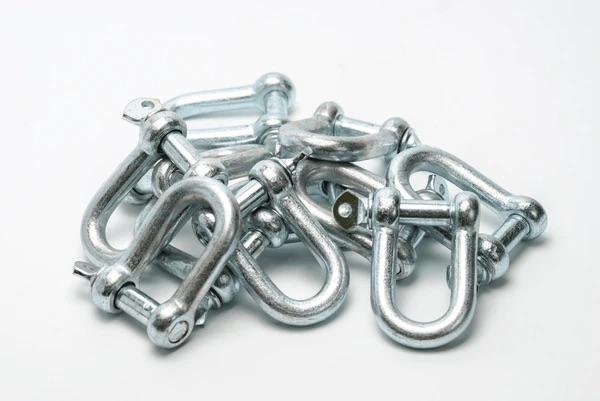
Improve shackle security
In some self-bondage scenarios I find that I need a fixed loop or ring which can be un-done without a key, but with some small difficulty. Here's some examples of how I make it harder to open a shackle.
❗️Before you get started...
Self bondage is incredibly dangerous and should only be practiced at your own risk! Please read my Self Bondage Safety Guide first. Also recommended: Bondage Safety Guide.
Shackles and how to use them
Shackles are quite useful in bondage as they offer a solid anchor point but are also quite easy to unlock and they don’t require a key. Although this is good, they are not escape-proof and so below is a method I use to lock them.
The shackle screw bolt usually has a hole in it. It’s not super clear to me why, but I noticed that it can be (ab)used for either making the shackle lockable or at least harder to open.
Making the shackle harder to unscrew
Here’s some simple examples of how you can improve the safety of the shackle, all of which force you to remove the clip/trigger which is blocking the bolt from being unscrewed - the trick being that the ring on the shackle is important.
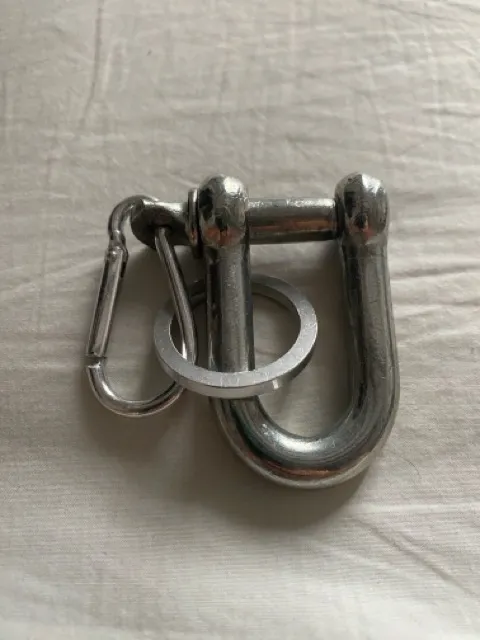
This first example above uses a simple carabiner clip, which first needs removing from the ring. After which, the shackle can be unscrewed. It can be removed fairly easily in 5-10 seconds.
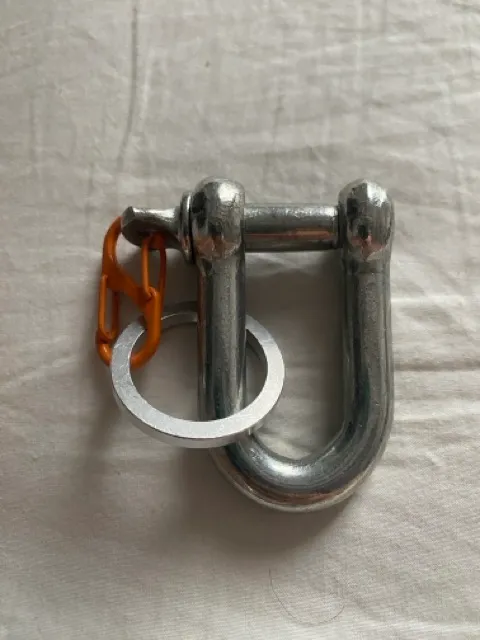
The second example above uses a double-sided clip (from AliExpress) and is harder to unclip from either the shackle hole or the ring. If wearing PVC/leather gloves, this is even harder, although not impossible! It can be removed in 5-20 seconds, but is sometimes fiddly.
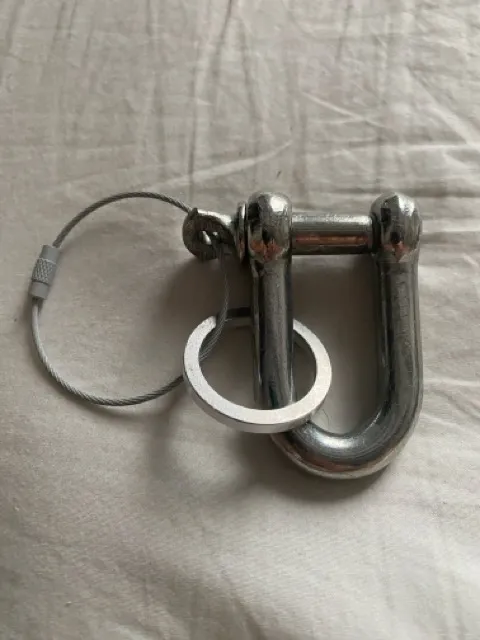
The third example above uses an unscrewable keyring (also from AliExpress), which is obviously normally designed for a set of keys. It can be unscrewed in about 10-15 seconds but is a bit fiddly.
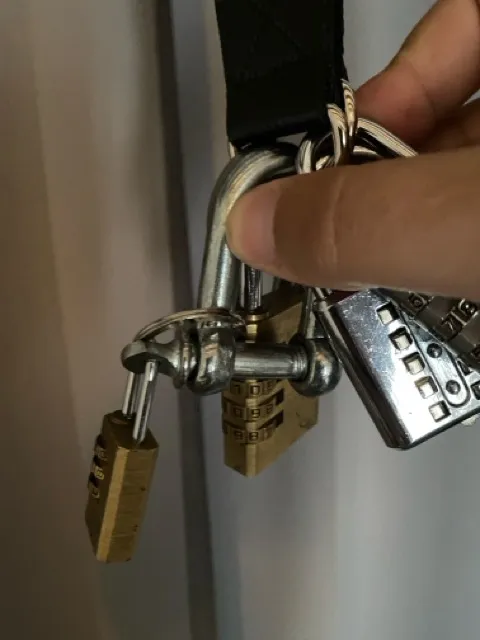
Above is a shackle with a combination lock. This can take approx. 5-30 seconds to remove, depending on how well you can see/access the lock tumblers and if you’re wearing gloves etc.
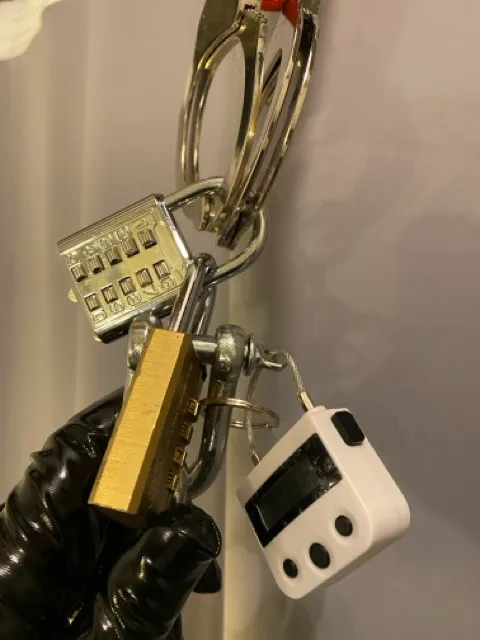
Here’s a shackle with a timer lock across the shackle/ring system.
⚠️ Important: Don’t use these at all as they’re unreliable and dangerous! I left it in for educational purposes only.
Using an ice lock with a shackle
The same method can of course be integrated with homemade ice locks and for self-bondage sessions it can be quite useful as it prevents the shackle bolt from being unscrewed until the ice melts.
Note: both images below are subtly different but use the same principal that the bottle of ice containing a frozen string needs to melt first so that the bare string can then be threaded back through the shackle hole, before unscrewing the shackle bolt. In all cases, I connect my restraints to the shackle, such as shackle to waist belt and cuffs through the shackle. It’s easy to lock the final piece of gear by simply locking the padlock, which closes the system.
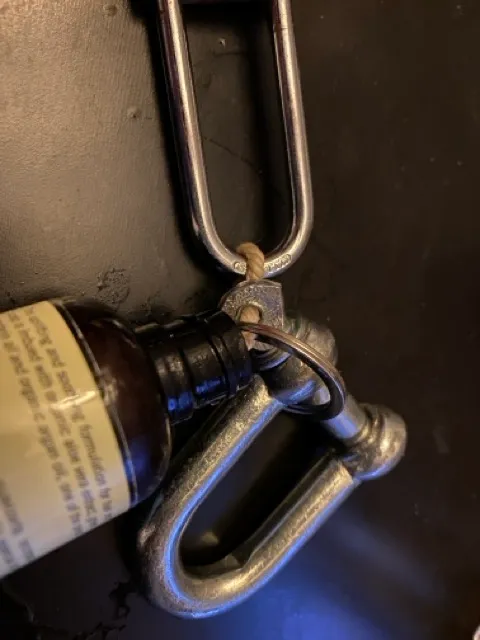
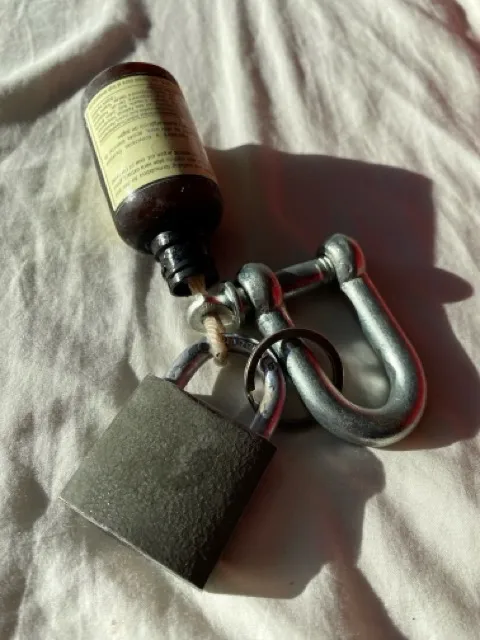
One excellent feature to the ice shackle system is that the load bearing forces are not on the ice itself, but on the shackle, since cuffs/restrains will be connected to the shackle. In other classic ice releases, the forces run directly on the ice and so with pulling force are easier to open.
⚠️ Important: Make sure you can unscrew the shackle even after the ice has thawed. For repeated use keep the hardware dry and oiled if needed, so that rust isn’t a problem.
An even simpler design
I don’t have the pictures yet, but an even more simplified variation on the above design is to remove the padlock and ring and just have the rope going from the shackle, through the shackle bolt hole and into the frozen bottle, but the problem is you need to freeze the whole system together, which can be a bit awkward to freeze as a whole.
More shackle tricks
It’s also possible to daisy-chain this technique and I’ve found it to be quite useful if you want a bit of an escape challenge or game to keep you busy during sessions. All you need to do is attach multiple shackles in a line, like this:
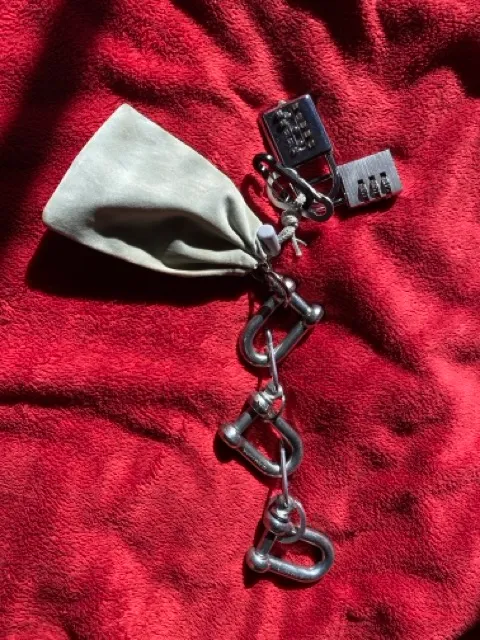
The image above shows a daisy-chained shackle escape game that I made, which also has the small grey bag which contains a combination lock. You work top to bottom and first have to remove the combination locks and carabiner clips which then allow you to remove the knot from the rope which is preventing the bag from being opened. Next the combination/shackle lock inside the bag can be opened which means the top of the 3 shackles can be removed and now the next carabiner clip can be opened (was previously blocked by the shackle) and so on. You would connect your bondage gear across the final shackle at the bottom of the photo.
Even more uses
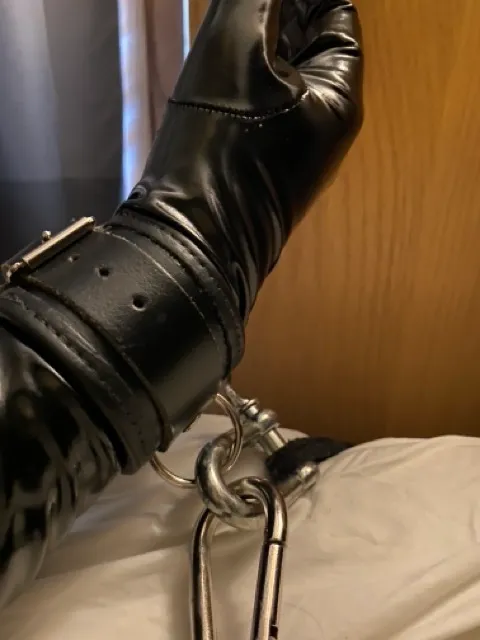
I’ve also use shackles on bed ties, spreader bar setups, waist belts and in several other ways. In the below setup your arms are spread to each corner of the bed. You can remove the shackle by unscrewing it, but it is awkward and can take a minute or two as it can be quite fiddly. Note - although possible, this method is not recommended for self-bondage and can be dangerous.
With spreader bar
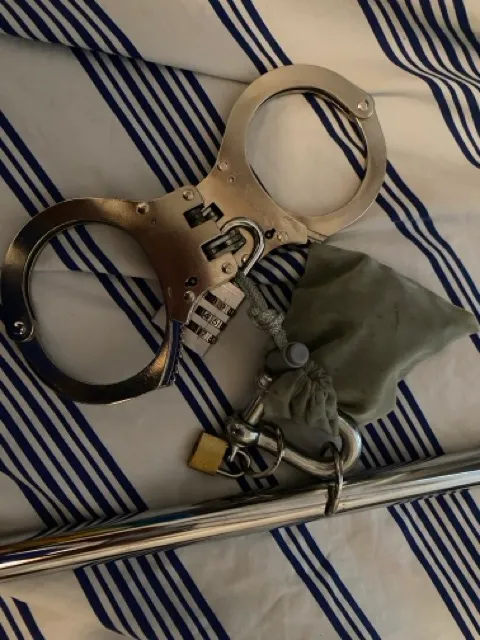
Below I connect cuffs to a leg spreader bar with a shackle + ice bag combination attached. The bag contains ice cubes that won’t pass through the shackle for about an hour. They also can’t be removed from the bag due to the knot.
My ankles would be attached to the bar, out of the photo. In this case the combination lock is also an escape option and can be released quickly if needed too or used to try to pick the combination (I can usually do it in somewhere between 1-15 minutes without looking). The small padlock ensures that the shackle is locked, so it basically acts as a fixed ring in this setup.
⚠️ Note: Be very careful relying on picking combination locks and they shouldn’t be used as a reliable escape mechanism, since there’s no guarantee you will get the combination.
With a waist belt
Below is a waist belt setup with cuffs where the shackle is preventing the cuffs from being removed and the shackle has an ice lock (as shown above). The whole thing is frozen because I set it up and froze it as it was to save time, but you could also just freeze the plastic bottle by itself. Eventually the handcuffs will slide away from the body off the little string but you first need to remove the shackle system before you can do it. It’s quite a good technique as it keeps the hands quite close to the body and the hinged cuffs offer excellent restriction, but you still have sufficient space to unscrew the shackle when the ice permits.
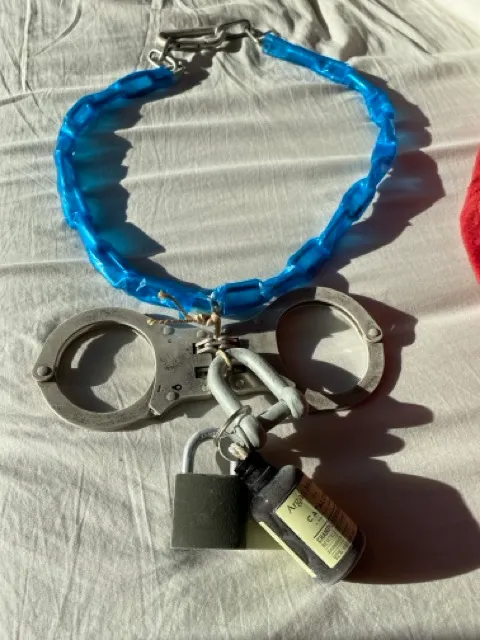
One of the con’s of this setup is that you can accelerate the melting of the ice, since you can use your hands to heat up the bottle.
Locking shackles
For normal bondage sessions, shackles are good for securing a big O-ring to the bed, then you can lock it off with a padlock, as shown here. For me it’s useful so that I can keep the bed straps in place then just add the shackle + metal O-ring hardware when needed. Note: In this example the shackle is locked and requires a key for the padlock.
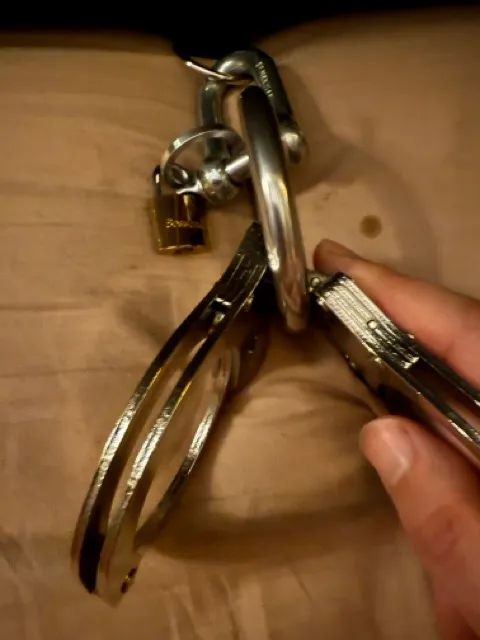
For this setup you could of course just use a padlock instead of a shackle but I found shackles to be cheaper in general and designed to have load bearing forces across them, plus I don’t have many padlocks wide enough to go over the O-ring. If you pair this setup with the ice release shackle system above, your partner can have you cuffed to the bed in relative safety with an ice release. Also, any pressure you apply to the system is across the O-ring + shackle and not the ice, so your struggles won’t help to break the ice 😉!
Summary
That’s it for now, remember to play safe and the information above it for purely from my experience. It should be for educational purposes and bondage enthusiasts looking to improve the safety of their playtime.